Walk the brick streets of Historic Roser Park on any given weekday and you won't pass a coffee shop, a restaurant, or a corner store. That's not an oversight. The neighborhood was platted in the early 1910s as a streetcar suburb, one of the first residential subdivisions built outside downtown St. Petersburg, and it was designed to stay that way: homes on hills, a creek running through the middle, and nothing commercial inside its 270 acres. For more than a century, that has been the whole point. Roser Park doesn't have a business district because it was never supposed to need one.
This year, that changes, though not in the way you'd expect. The shift isn't happening on the neighborhood's own brick streets. It's happening at the edge, on Dr. Martin Luther King Jr. Street South, in a restored 1925 building that's becoming home to two very different businesses at once.
The Neighborhood That Runs on Borrowed Space
To understand why two new storefronts matter here, it helps to know what Roser Park has relied on instead. The district sits along Booker Creek, and its defining feature is topography that's rare anywhere in Florida: steep, hilly banks that developer C.M. Roser walled off in 1914, in places reaching five to six feet high, just to keep the ground under the houses from sliding into the water. That engineering choice created the neighborhood's signature look, a ravine lined with 173 homes in styles ranging from Craftsman bungalows to Dutch Colonials and American Foursquares, all listed on the National Register of Historic Places for their significance in community planning and landscape architecture.
What the neighborhood has never had is a commercial corner. Residents get their coffee, their groceries, and their dinner somewhere else, usually a short bike ride north toward the Edge District or downtown. Inside Roser Park's own boundary, the social infrastructure has always been temporary and resident-run: porches turned into stages for an afternoon, a community garden path, a footbridge over Booker Creek that becomes a candlelit walking route each December. The neighborhood association leans on this pattern constantly. Its Jasmine Terrace community garden hosts plant swaps and birdfeeder workshops throughout the year, and this fall it's installing something new: a children's storybook called "The Monarch and the Manatee," about mitigating red tide with an ocean-friendly garden, mounted page by page along the garden's walking path. Installation is set for September 19, with a ribbon-cutting celebration planned for November 14.
That's the model Roser Park has run on for a hundred years. Borrow a porch, borrow a path, borrow an evening. Nobody has had to build anything permanent, because the neighborhood was never zoned to need it.
Two Businesses, One Building, Different Timelines
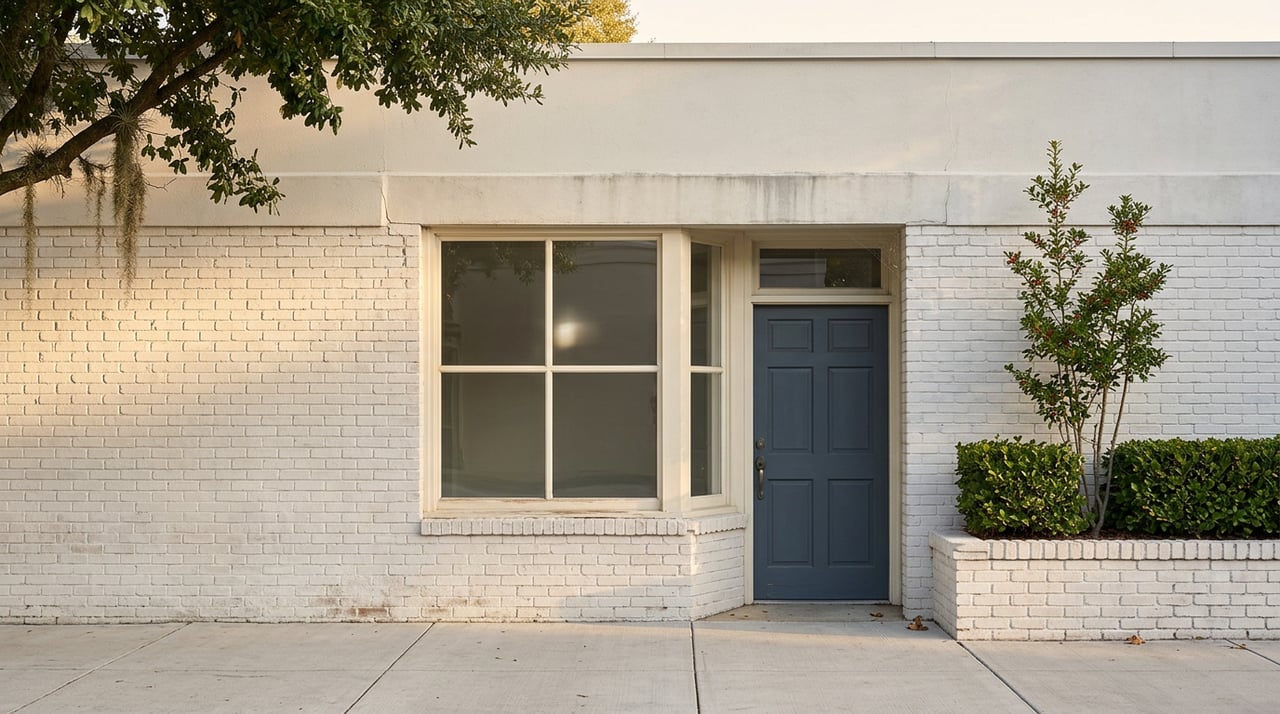
The building changing that sits at 914 Dr. Martin Luther King Jr. Street South, technically between the Roser Park and Campbell Park neighborhoods rather than inside either one, which is exactly why it's been available to become something neither neighborhood had on its own. It's part of a larger adaptive-reuse effort called The Looking Glass Initiative, led by real estate broker John Barkett and his wife Julie, and it's set to hold at least two tenants that couldn't be more different in what they're selling, even if both are ultimately selling a place to sit down.
The first is Pages and Perks, a family-friendly bookstore and mocktail bar from owners Kate and Ben Johnson. Kate spent years working directly for HSN before the network relocated to Pennsylvania; Ben worked in HSN production. When the company moved, they stayed in St. Petersburg and built something neither of their careers had prepared them for: a 1,600-square-foot shop carrying fiction, young adult titles, and works by local authors, with a six-seat bar serving beer, wine, and nonalcoholic mocktails from Curious Elixirs, plus a kids' section so parents aren't choosing between browsing and supervising. The store was originally supposed to open in June. As of this summer, that date had slipped to August, a delay Kate attributed simply to wanting the renovation done right rather than rushed. In the meantime, Pages and Perks has been running as a pop-up inside the lobby library of the Cordova Inn on 2nd Avenue North, a downtown hotel whose owner offered the space once it became clear the couple was ready to start selling books even before their own storefront was finished.
The second tenant is Café Ora, and it's notable for a detail that flips the expected order: while Pages and Perks was the business everyone heard about first, Café Ora is on track to actually open first, this fall, as the initiative's debut tenant. Founder Meiko Seymour has described the café's mission in terms that go well beyond coffee.
"It's a love letter to Campbell Park, Bartlett Park, 13th Street Heights, and Historic Roser Park."
The café occupies its own restored century-old space within the same development, with original brick and exposed beams left intentionally visible. Seymour has said he's building in a pay-it-forward system so customers can cover a drink or a meal for a neighbor who can't, along with a program to provide free breakfast sandwiches to students walking to nearby schools.
What Two Storefronts Are Actually Testing
Here's the part that matters if you already live on Roser Park's brick streets rather than just visiting for the Tour of Homes. Everything the neighborhood has built socially so far has worked because it's occasional. A porch becomes a music venue for one Saturday. A garden path gets a storybook installed for a season. A footbridge gets lit with luminaries for one December evening, and then it goes back to being a footbridge. None of that requires the neighborhood to hold onto foot traffic on a Tuesday afternoon in July.
A bookstore with a bar and a café built around breakfast sandwiches are different. They're open five, six, seven days a week. They don't need a festival to justify their existence. If Café Ora and Pages and Perks succeed at what they're describing, doing so requires people from Roser Park to treat a business right on their boundary the way they've always treated their own porches and paths: as a place you go without an event forcing you there.
That's not a small ask in a neighborhood that has spent a century organizing itself around the opposite habit. It's also not a given. Plenty of St. Petersburg's historic districts sit within walking distance of commercial strips they never use daily, preferring the routines that already work. What makes this particular test worth watching is that both businesses are explicitly naming Roser Park as part of who they're for, not just where they happen to be located. Seymour didn't build Café Ora and then discover it was near Roser Park. He built it as a message to Roser Park specifically, along with three neighboring communities.
What's Already on the Calendar
Whatever happens with the two storefronts, the neighborhood association isn't waiting to find out before it keeps doing what it does. The 2026 calendar already includes:
- The Jasmine Terrace Walking Storybook installation, going in along the community garden path starting September 19
- A ribbon-cutting celebration for that same installation on November 14
- The neighborhood's holiday luminaries tradition, when residents light the footbridge path along Booker Creek each December and walking neighbors are encouraged to bring hot cocoa and sing along the way
- Ongoing quarterly meetings where the Historic Roser Park Neighborhood Association reports back on projects like this one
None of that changes because a bookstore or a café opens nearby. What might change is what happens between those scheduled evenings, on the ordinary Wednesday afternoons when there's historically been nowhere on Roser Park's own ground to go.
If you're already walking these brick streets, the honest way to watch this unfold is simple: notice which one you end up in first, and notice whether you keep going back once the newness wears off. That's the real test, and it's one no festival calendar can answer for you.
For those with questions about property, prep, or timing in Roser Park or elsewhere across St. Petersburg, Plotkin Homes is happy to talk through what's changing on the ground here and what it might mean for your own plans. Contact us.
