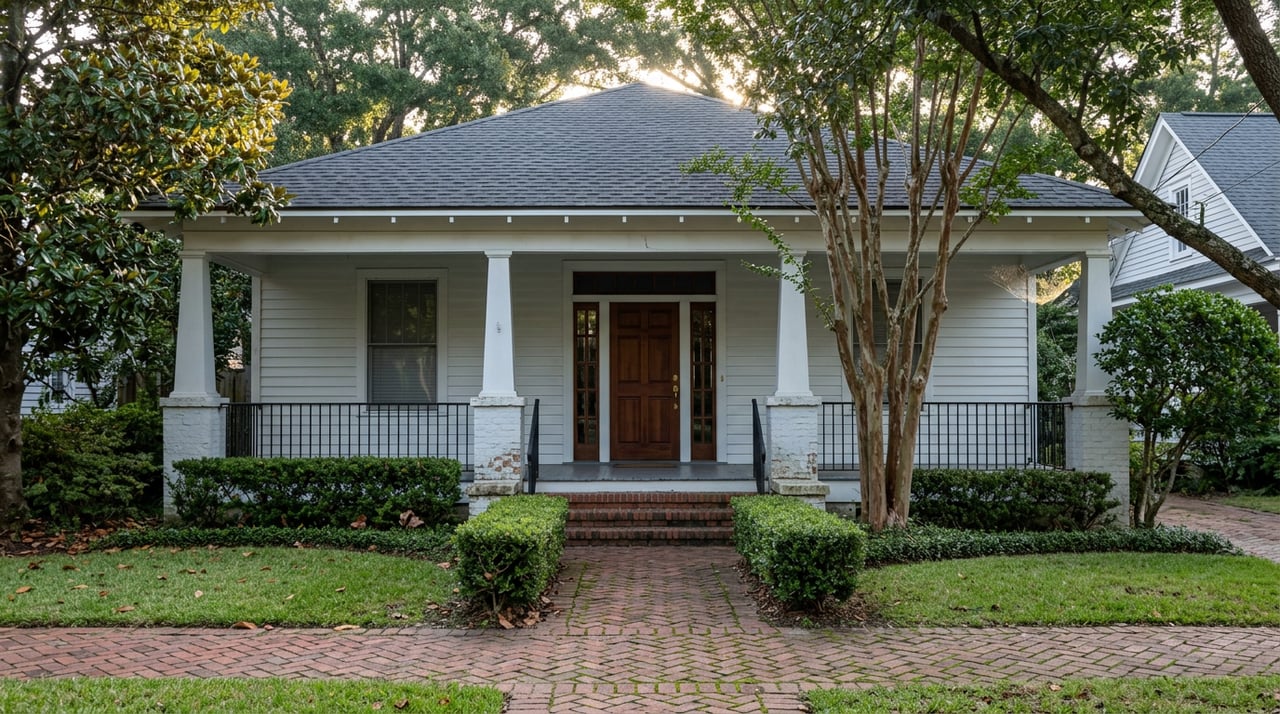
Walk the four streets that box in Euclid St. Paul's and you will not cross a single storefront. Dr. Martin Luther King Jr. Street North marks the eastern edge. Sixteenth Street North marks the western edge. Ninth Avenue North closes it off to the south, 22nd Avenue North to the north. Inside those lines: 240 acres of brick paving, craftsman bungalows, and colonial-revival cottages built between the 1920s land boom and the years just after. Not one restaurant. Not one shop. The commercial energy that outsiders associate with this part of St. Petersburg, the wine bars and espresso windows people mean when they say "MLK corridor," sits just outside the boundary the neighborhood drew for itself a century ago.
That absence tells you something the glossy neighborhood guides skip past. Euclid St. Paul's did not need a business district to build an identity, because it built one out of something else entirely: a volunteer calendar. This month, as the Euclid St. Paul's Neighborhood Association kicks off its annual Oktoberfest, that calendar is doing exactly what it has done for over a century, running the neighborhood's social life without a single tenant lease involved.
Four Streets, Zero Storefronts
The land was an orange grove as recently as 1912, co-owned by Mary Eaton, before developer John B. Green purchased the 240-acre parcel in 1921 and platted it into three subdivisions: Edina-Garden of Eden, Hilcrest, and Old Kentucky. Green's deed restrictions required homes worth at least $6,000, a serious sum in the 1920s, and at least six rooms. The result is a neighborhood built entirely for living in, not shopping in: craftsman bungalows and two-story colonials filled the eastern blocks near what is now MLK, smaller houses filled in toward 16th Street as the boom continued, and duplexes and small apartment buildings settled into the northeastern corner.
Nothing in that plan set aside a retail corridor. The nearest commercial strips, Central Avenue's business district and the shops along MLK, sit outside the boundary lines by design, not by drift. That distinction matters if you have ever wondered why Euclid St. Paul's reads as quieter and more residential than neighborhoods with a similar age and architecture. There is no foot traffic pulling non-residents through on their way to a coffee shop. Every block inside the lines is there because someone lives on it.
The Calendar Is the Infrastructure
What fills the gap where a main street would normally sit is the Euclid St. Paul's Neighborhood Association, known locally as ESPNA. Established in 1921, the same year Green began platting the land, it has run continuously since, making it one of the older neighborhood associations in the city. It holds general meetings the first Thursday of the month every other month, starting in February, in the cafeteria at St. Paul's Catholic School. Since 2010, a portion of the proceeds from ESPNA's events has gone to local charities, a detail that turns the calendar from a social convenience into something closer to a small civic institution.
Here is what that calendar actually looks like across a typical year:
| Event | Season | Where |
|---|---|---|
| Neighborhood Yard Sale & Block Party | Spring | Yard sale neighborhood-wide, block party at 15th Avenue and 10th Street |
| Summer Bike Crawl | Early summer | Stops at three local establishments |
| Oktoberfest | September | 1142 12th Street North |
| Haunted Hike | October | Multiple neighborhood homes |
| Holiday light decorating | December | Neighborhood-wide |
Compare that to a neighborhood built around a commercial strip, where the businesses set the rhythm and the association exists mostly to advocate for them. Here it runs the other way. ESPNA supplies the burgers and hot dogs at the spring block party. ESPNA books the Bike Crawl stops. ESPNA organizes the Haunted Hike route through private homes. The neighborhood does not attend events hosted by businesses. It hosts its own.
The Neighborhood's Biggest Night Doesn't Need a Reservation
If you want the clearest evidence that Euclid St. Paul's built its own social infrastructure rather than importing one, look at October. Neighborhood volunteers have organized a "ghost tour" of the area since 2005, sending costumed hosts to lead visitors through homes where fictional spooky stories get told on porches and front lawns. It is described, even by the people who run it, as low-tech and old-fashioned. There is no ticket booth, no third-party events company, no venue rental. It is residents opening their own front yards to their own neighbors, and it has grown into the association's single biggest event of the year.
That is a strange thing to be true about a neighborhood two miles from downtown St. Petersburg's museum district and its Beach Drive galleries. Most St. Pete neighborhoods anchor their identity to a restaurant, a park pavilion, or a commercial anchor tenant. Euclid St. Paul's anchors its biggest annual gathering to two decades of volunteers telling stories on their own front steps.
When the Building Changes, the Neighborhood Absorbs It Through Institutions, Not Storefronts
The one major change working through the neighborhood right now proves the same point from a different angle. On the southern edge of Euclid St. Paul's, right along the 9th Avenue North boundary line, sits a 75-year-old former church, the Pinellas Vietnamese Church of the Nazarene, at 1225 9th Avenue North. Local investors Joshua and Danielle Neitz purchased the building and its adjacent parking lot for $1.325 million in February 2025, and the city's Community Planning and Preservation Commission has since approved plans to convert it into 20 workforce housing apartments, ranging from roughly 400 to more than 1,000 square feet, serving households earning up to 80 percent of the area median income.
Joshua Neitz described the building's bones to St. Pete Rising in blunt terms: "This structure is a fortress. The footprint is staying the same. The open span makes it easy to repurpose without needing to demolish walls or add bearing panels. We can really create some cool units and keep them at reasonable rents." Danielle Neitz said the idea took years to land. "For two years, we would pass by that church, and Joshua would always talk about it. He would leave hand-written notes at the property, and finally, one day, he got the call and met with the pastor."
Notice what is not happening here. The neighborhood is not gaining a new retail storefront or a franchise location. It is watching a church, a building that was already part of its institutional fabric, take on a new role inside the same footprint. Even growth in Euclid St. Paul's runs through existing community structures rather than new commercial ones.
The Corridor Is Right There, Just Not Inside the Lines
None of this means residents are cut off from restaurants and cafes. The MLK North District sits directly along the neighborhood's eastern boundary, close enough that a short walk or bike ride gets you there. It includes:
- Uptown Eats, a bakery and cafe where everything is made in-house
- Pineapple Espresso, a drive-thru serving house-roasted Guatemalan coffee alongside stuffed avocados and specialty toast
- Golden Isles Brewing Co., which pairs draft beer with rotating food trucks on a spacious patio
- Calida Kitchen & Wine and 86 Wine Bar, both small-plate spots built for neighborhood hangs
- The Violet Stone, which started as a food truck and now serves pizza and cheesesteaks on house-baked bread
- Mozza Paninoteca, an Italian-inspired sandwich and wine shop that opened nearby this summer
The point is not that Euclid St. Paul's lacks access to a food scene. It is that the food scene lives on the other side of a line the neighborhood drew for itself a hundred years ago, and the neighborhood never treated that as a problem worth solving. The commercial corridor handles the coffee and the cheesesteaks. ESPNA handles everything else.
That split is worth understanding if you already call Euclid St. Paul's home, because it explains a pattern you have probably noticed without naming it. The neighborhood does not announce itself with a new restaurant opening or a retail buildout. It announces itself every other month at St. Paul's Catholic School, every October on somebody's front porch, and every September at 1142 12th Street North, where the Oktoberfest season starts the same way it has for years: neighbors, not vendors, running the show.
If you are curious about what else is on ESPNA's calendar this fall, or you are weighing a move into a neighborhood that runs on this kind of local infrastructure, the team at Plotkin Homes knows these blocks well enough to walk you through what daily life here actually looks like, calendar included. Contact us.
