By Plotkin Homes
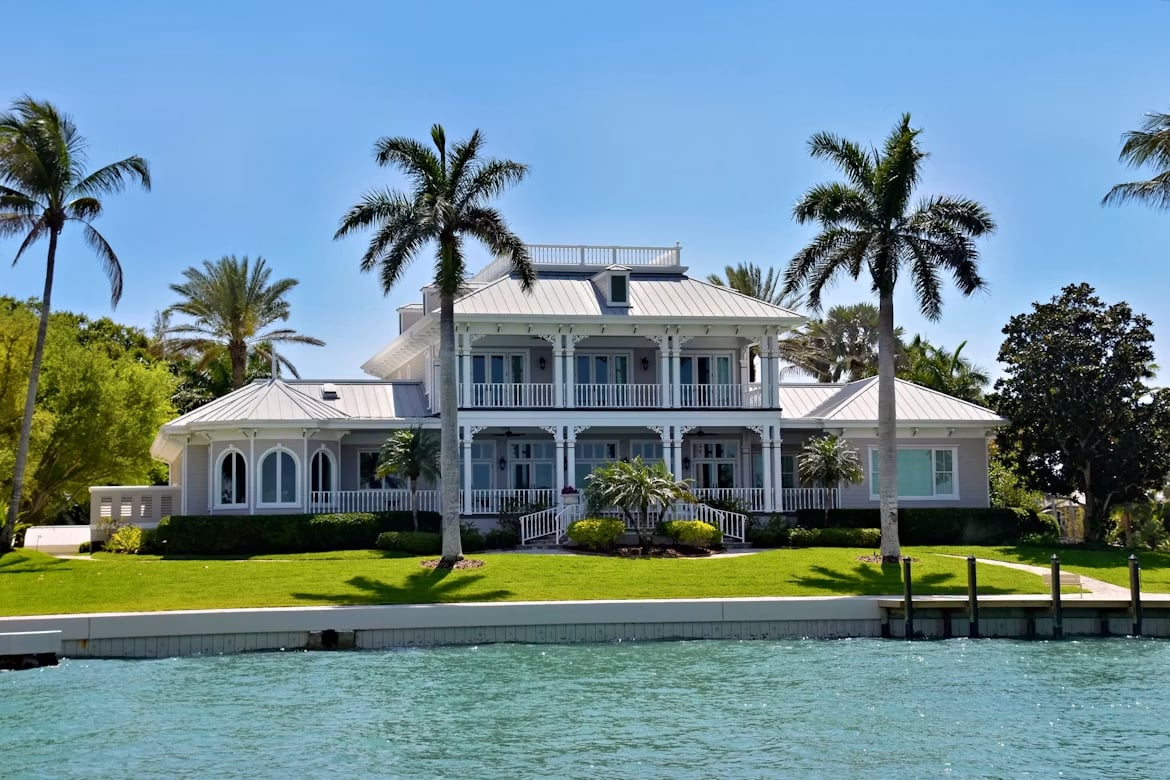
St. Petersburg's waterfront is one of the most compelling in Florida. Tampa Bay, Old Coffee Pot Bayou, and the deep-water canals of Venetian Isles and Shore Acres give buyers a range of waterfront experiences that few cities can match. Buyers who understand the neighborhoods, the flood zone landscape, and the due diligence considerations specific to coastal property are consistently the ones who make decisions they feel good about long after closing.
Key Takeaways
- Discover the distinct waterfront neighborhoods of St. Petersburg, from the prestige bayfront estates of Snell Isle to the canal-front homes of Venetian Isles and Shore Acres.
- Learn how FEMA flood zone designations work in Pinellas County and what they mean for insurance requirements, costs, and Florida's updated flood disclosure law.
- Find out what an elevation certificate is and why it matters for every waterfront buyer in St. Pete.
- Understand how to evaluate a property's dock and seawall as part of a complete waterfront due diligence process.
The Waterfront Neighborhoods Worth Knowing
St. Petersburg's waterfront real estate is not a single market. Each neighborhood offers a different water access type, price point, and daily lifestyle, and understanding those differences is the starting point for any serious waterfront search.
St. Pete's Primary Waterfront Neighborhoods
- Snell Isle is the city's most prestigious waterfront address, with wide streets, estate-scale homes, and private docks along Tampa Bay. About a third of its more than 1,000 homes sit directly on the water, and downtown St. Pete is minutes away.
- Venetian Isles is a series of man-made finger islands with virtually every home on a waterfront lot, deep-water canal access, and direct ingress to Tampa Bay, making it the natural choice for buyers whose daily life centers on the boat.
- Shore Acres is one of the largest waterfront communities in Pinellas County, with canal-front and interior lots adjacent to the Weedon Island Preserve, offering a quieter residential character at a more accessible price point than Snell Isle.
- The Historic Old Northeast sits along Coffee Pot Bayou, with waterfront access at North Shore Park and Coffee Pot Bayou Beach, where dolphins and manatees are a regular sight alongside restored historic architecture that is unlike anything else in the city.
The difference between open bay frontage, canal access, and bayou proximity affects boating capability, insurance costs, and long-term value in ways that are worth understanding before narrowing a search.
Flood Zones and Florida's Disclosure Requirements
Flood zone designation is one of the most consequential variables in any St. Pete waterfront purchase. After recent hurricanes, buyers and lenders are paying closer attention to flood risk than at any point in the market cycle.
What Buyers Need to Know About Flood Zones
- Zone AE properties, which include most of St. Pete's canal-front and bayfront neighborhoods, are required to carry flood insurance when financed with a federally backed mortgage.
- Zone VE properties are coastal high-hazard areas subject to wave action as well as flooding, typically found in exposed waterfront locations, and carry the highest insurance premiums and strictest building requirements.
- Zone X properties carry lower flood risk and flood insurance is generally not required by lenders, though coverage is still worth carrying given that a meaningful share of Pinellas County flood claims come from outside the highest-risk zones.
- FEMA's Risk Rating 2.0 system now calculates flood insurance premiums based on each property's individual characteristics, including elevation, distance to water, and construction type, meaning two adjacent homes in the same zone can carry materially different premiums.
Florida's updated Flood Disclosure Law (HB 1049) requires sellers to disclose known flood history. Reviewing that disclosure alongside independent research before going under contract is a standard step for every waterfront buyer.
Elevation Certificates
An elevation certificate, prepared by a licensed surveyor, records a building's elevation relative to the Base Flood Elevation established by FEMA for its specific zone. For waterfront buyers in St. Pete, it is one of the most useful documents available before making a purchase decision.
Why Elevation Certificates Matter
- A property that sits above its Base Flood Elevation typically qualifies for lower flood insurance premiums, and the difference can be substantial over the life of ownership.
- Where no current certificate exists, buyers can commission one during the inspection period to understand the full insurance cost picture before committing.
- Elevation data also governs what additions and renovations are permissible under floodplain management rules, which affects both the current use and future potential of the property.
- When comparing two otherwise similar waterfront properties, the elevation difference and resulting insurance cost can meaningfully change the total ownership calculation.
Requesting the elevation certificate and current flood insurance policy as part of the seller disclosure package should be standard practice on every St. Pete waterfront offer.
Dock and Seawall Condition
The dock and seawall are as important to evaluate as the home itself. A seawall in poor condition or a dock requiring replacement represents a substantial post-closing cost that a standard home inspection will not capture.
What to Inspect Before Closing
- Seawall condition should be evaluated by a marine contractor, not a standard home inspector. Cracks, bowing, and erosion behind the wall are conditions that can require significant remediation.
- Dock permitting history should be confirmed before closing. Unpermitted structures or modifications can create complications during the transaction and liability after closing.
- Following Hurricanes Helene and Milton, buyers should ask specifically about any storm damage to waterfront infrastructure in 2024 and request documentation of repairs made.
- Boat lift functionality, dock electrical systems, and water hookups should all be included in any repair negotiation if deficiencies are found during inspection.
Frequently Asked Questions
Can I negotiate based on flood insurance costs?
Yes. Flood insurance is a real component of a property's carrying cost, and buyers who discover the insurance obligation is higher than budgeted can use that as part of a price negotiation. Completing the insurance research before submitting an offer, or including a contingency to review it during the inspection period, puts that negotiation on solid footing.
What is the practical difference between buying on a canal versus open bay?
Canal-front properties offer calmer water, more protected dockage, and typically more privacy, while open bay properties offer unobstructed views and direct access without navigating canal ingress. The trade-off is that open bay exposure generally carries higher insurance costs and greater storm surge risk. Which configuration fits best depends on how the buyer plans to use the water daily.
How has recent hurricane seasons affected waterfront buying in St. Pete?
Hurricanes cause flooding across several of St. Pete's waterfront neighborhoods and put flood risk more front-of-mind for buyers, sellers, and insurers alike. Buyers purchasing in the current market should factor that potential change into their long-term planning.
Buy St. Pete Waterfront With the Right Team
Waterfront properties in St. Pete are among the most rewarding purchases in Florida, and buyers who approach them with the right preparation close with confidence. We specialize in St. Petersburg waterfront real estate and bring detailed knowledge of the neighborhoods, flood zone landscape, and coastal due diligence process to every buyer we work with.
Buyers who spend time on St. Pete's waterways will soon understand why waterfront real estate here holds such enduring appeal. Plotkin Homes is ready to help you find the right property on the water.
