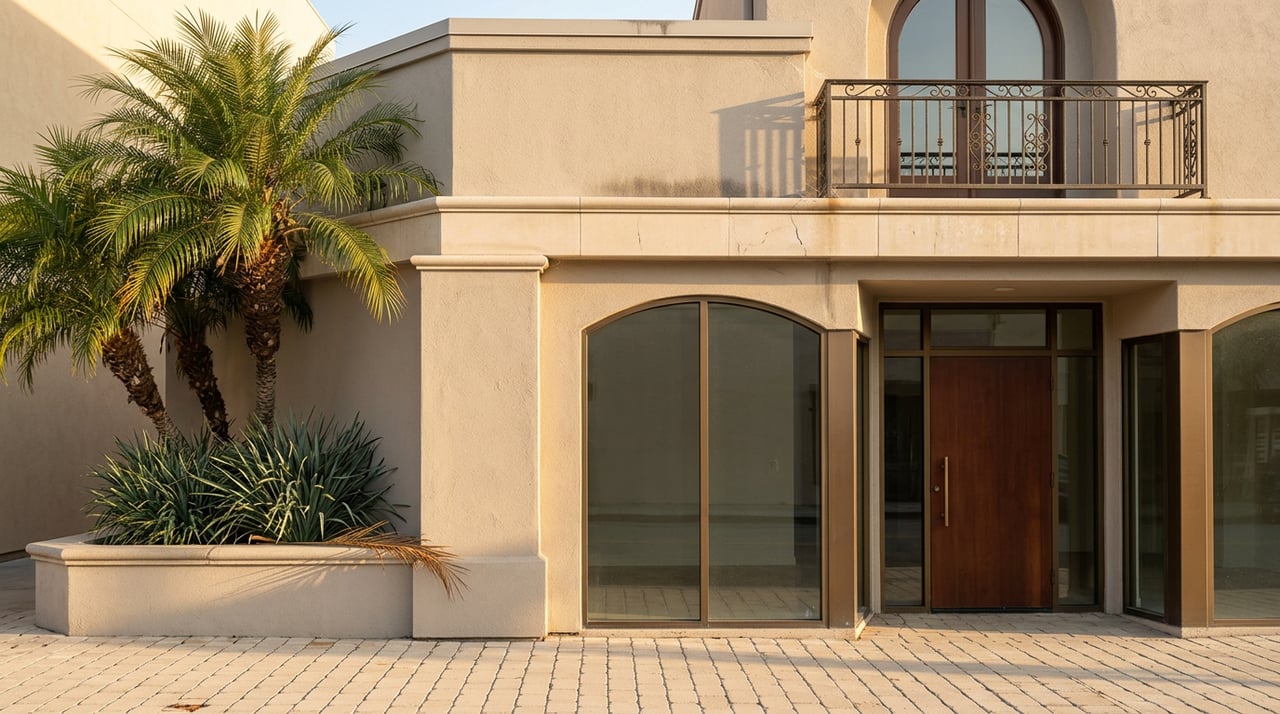
Juno & the Peacock is about to turn one. The St. Pete Chamber cut the ribbon on the restaurant on August 23, 2025, out front at 400 Beach Drive, which means the newest kitchen on this stretch of waterfront has already served a full four seasons. That's worth sitting with, because the thing that makes this restaurant interesting isn't how new it is. It's how old the address underneath it is.
Sixteen Years, One Address, Two Restaurants
400 Beach Drive had exactly one restaurant name on it for twelve years. Local restaurateur Steve Westphal opened 400 Beach there in 2009, when a 300-seat restaurant on this block was still a real bet in Downtown St. Pete. It worked, and in 2021 Westphal sold the business to Shawn and Jeanna Damkoehler. They ran it as a seafood and tap house for a couple more years, then closed it for renovations in 2023. Two years later, it reopened as Juno & the Peacock. That's not a new restaurant filling an empty storefront. It's a full gut-and-rebuild of the same 8,200-square-foot footprint, designed by AvroKO out of New York with local firm Behar Peteranecz handling the architecture and St. Pete-based RenoBoyd Building Co. as contractor. Same street number. Same view of North Straub Park and the Vinoy. New name, new kitchen, and seating for up to 268 across the restaurant and its attached cocktail lounge, Pluma.
That's not an isolated case. It's how this block tends to grow.
The Beach Drive Pattern
Parkshore Grill has operated on Beach Drive since 1996, before most of the buildings around it existed in their current form, and it's still run by the same ownership group that opened it. A few doors down, Isu occupies the basement of Fortu, sharing an entrance, an owner, and a management team with the restaurant upstairs rather than opening as its own freestanding address. And the Damkoehlers themselves aren't new to the block either. Before Juno & the Peacock, their hospitality company bought Alto Mare and Annata Wine Bar one block from 400 Beach in December 2020, then folded those spaces into Allelo, the Mediterranean restaurant that's been open at 300 Beach Dr NE since—showing how waterfront dining in Old Northeast and Beach Drive continues to evolve. The same couple now runs two of the district's anchor addresses, both of them inherited spaces rather than ground-up builds.
None of this is a knock on the food. It's a pattern worth naming for anyone who lives here: growth on this particular stretch of downtown almost never means new construction. It means someone with local roots taking over an existing address and rebuilding the inside.
Co-owner Jeanna Damkoehler, a St. Pete native, said she was proud to contribute to the growth of the city and bring new dining experiences to her hometown when the restaurant was announced.
That's the accurate way to describe what's happening here. Growth, not expansion. The building stock along Beach Drive has been essentially locked in place for a decade and a half. What changes is who's cooking inside it.
The Exception Breaking Ground This Fall
Which makes the other big thing happening in this district actually strange, in a way that's easy to miss if you're only tracking restaurant openings.
The Dalí Museum's current building opened in 2011, a concrete structure wrapped around a geodesic glass dome known as the Enigma, designed by Yann Weymouth. It doubled the museum's size at the time and became the anchor building for this entire corridor and a focal point of St. Pete's Museum Row. Since then, nothing new has gone up on that stretch of waterfront. Restaurants have changed hands. The Dalí itself has not added a square foot.
That ends this fall. The museum has confirmed a $65 million expansion, adding roughly 35,000 square feet on the south side of the existing building, on what's currently a parking lot between the museum and Dali Boulevard. Groundbreaking is expected this fall, with the new wing opening in 2028. The Beck Group, the same firm that built the 2011 structure, is designing and building the addition, consulting with Weymouth again to keep the new wing architecturally tied to the original. The plan includes a third-floor Great Hall that functions as gallery space by day and converts into an event venue holding up to 400 people at night, plus a first-floor Learning Pavilion built to hold 90 K-12 students. Funding is coming from private donations, corporate sponsors, and Pinellas County tourist development tax dollars, the same public financing mechanism that supports Visit St. Pete-Clearwater's tourism programs. The museum stays open the entire time.
If you live near Beach Drive, this is the one physical change you'll actually watch happen. Not a new storefront. A crane, a fenced parking lot, and the first new square footage this waterfront has seen since the Enigma went up.
Why This District Never Needed a Gallery Row
There's a reason the Dalí carries that much weight here, and it comes down to what kind of arts district this actually is. Second Saturday ArtWalk, the monthly citywide gallery crawl, pulls together the Central Arts District, Grand Central District, Warehouse Arts District, Uptown Arts District, and the Waterfront District into one evening. But if you've been to a few of these, you've probably noticed the storefront galleries clustering in the Warehouse and Grand Central districts, places like The Werk Gallery, Mirella Cimato Art Gallery, and the Morean Center for Clay. The Waterfront Arts District's contribution to that same night looks different. Its art identity runs through the Dalí, the Museum of Fine Arts on Beach Drive, and the James Museum on Central, plus performing arts at the Mahaffey Theater and the Palladium. This is a district built around a handful of large, permanent institutions—a major reason why St. Petersburg has one of Florida's most vibrant arts scenes—rather than a strip of small independent studios.
That distinction matters for how you should read the Dalí news. In a gallery-driven district, a $65 million capital project would be an outlier next to dozens of small storefronts turning over their own exhibits every month. Here, it's the museum's own institutional cycle. The Museum of Fine Arts runs its own calendar of special exhibitions and children's programming, and even maintains a rooftop apiary with 12 active beehives overlooking the waterfront. The James Museum runs its own. The Dalí's expansion isn't competing with a gallery scene. It's one of three anchors deciding, on its own long timeline, when to grow.
What Actually Changes This Fall
For someone living in or around this stretch right now, here's the practical version. Juno & the Peacock is open daily for lunch, dinner, and weekend brunch, marking a year at 400 Beach Drive with the same crowd that used to fill 400 Beach. Second Saturday ArtWalk keeps running its usual 5 to 9pm window every month, remaining one of the top things to do in St. Petersburg, and the Waterfront District's version of that night still means the museums and Beach Drive's restaurant row rather than a gallery hop. The one thing to actually watch for is fencing going up around the parking lot south of the Dalí sometime this fall, the first visible sign that the museum's fifteen-year construction pause is finally over.
None of this changes what makes Beach Drive worth walking on a Tuesday night: the water on one side, the restaurant lights on the other, and a building stock old enough that half the operators inside it grew up here. What's changing is smaller and more specific than that. One address quietly passed to its second restaurant in sixteen years and just marked its first anniversary under the new name. And one museum is about to do something this block hasn't seen since the Enigma first caught the light.
If you're already keeping half an eye on what's happening around your own block, whether that's a new dinner reservation, exploring local condos for sale in St. Petersburg, or navigating a broader relocation to St. Pete, Plotkin Homes tracks this neighborhood block by block. Contact Us when you're ready to talk about what any of it means for you.
