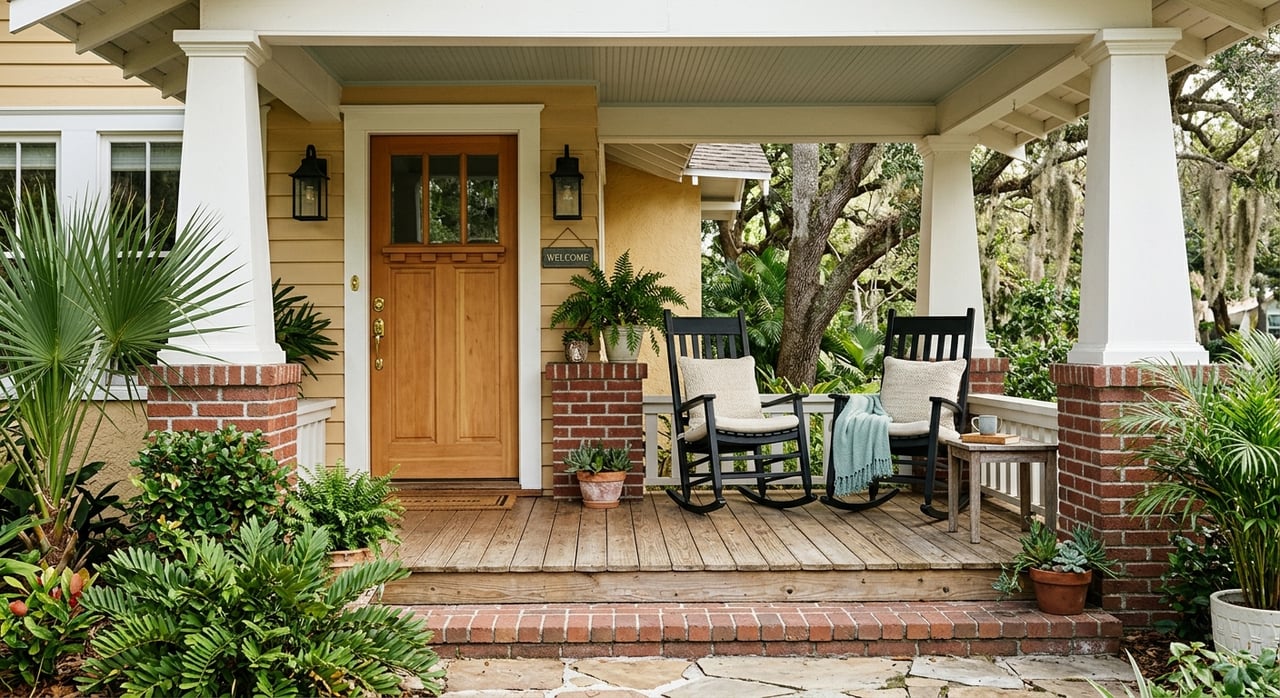
If you are drawn to front porches, mature trees, and homes with real architectural character, Historic Kenwood is one of the most distinctive places to consider in St. Petersburg. For many buyers, the appeal is not just the house itself. It is the feeling of living in a neighborhood with history, creativity, and close access to city life. If you are exploring bungalow living in Historic Kenwood, this guide will help you understand what makes the area special, what to look for in a home, and what to know before you buy. Let’s dive in.
Why Historic Kenwood Stands Out
Historic Kenwood is one of St. Petersburg’s best-known historic residential neighborhoods. According to the Historic Kenwood Neighborhood Association, development began in 1912, the area is about two miles northwest of downtown, and it was St. Pete’s first suburb and first year-round residential neighborhood. The neighborhood was also added to the National Register of Historic Places in 2003.
That history still shapes the experience of living here today. Historic Kenwood feels established and connected, with preserved homes, recognizable streetscapes, and a location that puts you near downtown without placing you in the middle of it. For buyers who want charm and convenience in one place, that balance is a big part of the draw.
What Bungalow Living Means Here
Historic Kenwood is often associated with bungalows, and for good reason. The neighborhood association notes that it has one of the largest concentrations of bungalows in the Southeast, while the National Register nomination identifies more than 500 Craftsman Bungalows in the district. These homes are a major reason the neighborhood has such a strong visual identity.
From the street, the details are easy to spot. Many bungalow homes feature low-pitched gabled roofs, wide eaves, exposed rafter tails, decorative beams or knee braces, and full-width front porches supported by brick piers. Those features help create the relaxed, welcoming feel that so many buyers picture when they think of classic St. Petersburg living.
Just as important, Historic Kenwood is not a one-style neighborhood. Along with Craftsman Bungalows, the district includes Frame Vernacular, Minimal Traditional, Mediterranean Revival, Colonial Revival, Prairie, American Foursquare, Dutch Colonial Revival, Ranch, Mission, and Romanesque Revival homes, according to the National Park Service nomination document. That mix gives the neighborhood depth and variety instead of a cookie-cutter look.
The Streetscape Matters Too
In Historic Kenwood, bungalow living is about more than square footage or finishes. The setting plays a major role in the neighborhood experience. The National Register nomination points to features like hexagonal sidewalk pavers, granite curbstones, brick streets, Seminole Park, and mature landscaping that all contribute to the area’s character.
That sense of place is part of why the neighborhood feels so memorable. You are not just buying a house. You are buying into a block-by-block environment where front yards, porches, sidewalks, and trees all shape daily life.
The neighborhood association’s tree-planting effort launched in 2023 also reflects ongoing community care for the area’s appearance and canopy. For buyers who value charm that extends beyond the property line, that matters.
Location and Lifestyle Appeal
Historic Kenwood offers a near-downtown location with strong access to some of St. Petersburg’s most active commercial and arts corridors. The neighborhood association describes Historic Kenwood as the city’s Neighborhood of the Arts, and notes that the City Council approved an Artist Enclave overlay in 2014 that allows members to teach classes and sell art from their homes.
The neighborhood is also closely tied to the Central Avenue corridor. Nearby, the Grand Central District sits west of downtown and includes Central Avenue plus 1st Avenue North and South, while the EDGE District runs along Central Avenue between 9th Street and 16th Street. In practical terms, that means you are close to restaurants, shops, galleries, and local events while still living in a residential setting.
For many buyers, this is where Kenwood really stands apart. You get historic architecture and a central location, but also a neighborhood identity that feels creative, active, and connected to the broader St. Pete lifestyle.
What to Know Before Buying a Bungalow
Buying in a historic district is different from buying in a newer subdivision. In Historic Kenwood, character is part of the value, and preserving that character matters. That is especially important if you are considering updates or if you are comparing homes with different levels of renovation.
The Historic Kenwood Neighborhood Association explains that in local historic districts, exterior alterations require prior approval from the City’s Preservation office through a Certificate of Appropriateness, or COA. You can learn more through the association’s historic preservation overview. This is a key point for buyers who plan to make changes after closing.
Focus on Exterior Features
When you tour homes, pay close attention to the features that define the home’s historic look. In Kenwood, that often includes:
- Front porches
- Windows
- Siding
- Rooflines
- Garage openings
- Front-facing additions
The National Register nomination notes that common changes over time have included porch enclosures, siding replacement, newer window types, and enclosed garage openings. It also notes that substantial alterations can affect whether a building is considered contributing or noncontributing within the district.
Renovation Is Not One-Size-Fits-All
That does not mean you should avoid updated homes. It means you should understand how a home was updated and whether the work aligns with the neighborhood’s preservation context. In Historic Kenwood, thoughtful renovations often carry more weight than generic cosmetic changes.
If you are buying with improvement plans in mind, it helps to evaluate both current condition and future flexibility. A well-located bungalow with strong original character may offer a different kind of value than a heavily altered home that has already lost some of its architectural detail.
How Historic Kenwood Compares on Price
Historic neighborhoods often come with assumptions about pricing, but the numbers in Kenwood tell a more balanced story. According to Zillow’s Historic Kenwood home value data, the average home value was $517,285 as of March 31, 2026, down 3.4% year over year. The same source showed 26 homes for sale and a median list price of $629,783.
At the city level, the research report notes that St. Petersburg’s median sale price was $499,900 in March 2026. The clearest takeaway is that Historic Kenwood tends to sit near the city’s center of gravity rather than at the very top end of the pricing spectrum. For buyers, that can make Kenwood especially appealing if you want a historic setting and strong lifestyle value without targeting only ultra-premium inventory.
Of course, pricing can vary widely based on architecture, lot, condition, updates, and exact location within the neighborhood. In a historic district, two homes with similar bedroom counts may have very different value depending on preservation, layout, and curb appeal.
Community Life in Historic Kenwood
Lifestyle is one of the biggest reasons buyers keep coming back to Historic Kenwood. The neighborhood association highlights a calendar of community events, including a monthly Porch Party, annual BungalowFest home tour, monthly neighborhood meetings, and an annual Tour of the Arts with artist studios open to the public. You can explore more through the Historic Kenwood Neighborhood Association.
These events help reinforce the identity of the neighborhood. Historic Kenwood is known for its support of the arts, its established residential fabric, and its community engagement. If you are relocating to St. Petersburg, that kind of built-in neighborhood culture can make the move feel more grounded from the start.
Is Historic Kenwood Right for You?
Historic Kenwood may be a strong fit if you want a home with architectural personality, a central St. Petersburg location, and a neighborhood atmosphere that feels established rather than newly created. It can be especially appealing if you value front porches, walkable access to local businesses, and homes that reflect early 20th-century design.
It may also be a good match if you understand that historic ownership comes with added responsibility. Preservation guidelines, exterior review requirements, and architectural nuance are part of the package here. For the right buyer, those are not drawbacks. They are part of what protects the neighborhood’s long-term appeal.
If you are considering a move to Historic Kenwood, the smartest next step is to look beyond listing photos and evaluate each property in context. Home style, preservation status, updates, and location within the neighborhood all matter. If you want strategic guidance on Historic Kenwood and other St. Petersburg neighborhoods, Plotkin Homes can help you navigate the details with a local, data-informed approach.
FAQs
What types of homes are common in Historic Kenwood?
- Historic Kenwood is best known for its Craftsman Bungalows, but it also includes Frame Vernacular, Minimal Traditional, Mediterranean Revival, Colonial Revival, Prairie, American Foursquare, Dutch Colonial Revival, Ranch, Mission, and Romanesque Revival homes.
Do Historic Kenwood homes require approval for exterior changes?
- Yes. The Historic Kenwood Neighborhood Association says exterior alterations in local historic districts require prior approval from the City’s Preservation office through a Certificate of Appropriateness.
What bungalow features matter most in Historic Kenwood?
- Key features to evaluate include porches, windows, siding, rooflines, garage openings, and front-facing additions because they help define the home’s historic character.
How close is Historic Kenwood to downtown St. Petersburg?
- According to the neighborhood association, Historic Kenwood is located about two miles northwest of downtown St. Petersburg.
How does Historic Kenwood compare with the broader St. Petersburg market?
- Based on the research provided, Historic Kenwood pricing sits near the broader St. Petersburg market rather than at the ultra-premium end, though individual home values vary widely by style, condition, and updates.
